

Introduction
Real estate marketing has moved far beyond static listing photos. In the current U.S. market, buyers have more choices and, in many areas, more time to compare properties. Redfin reports that the slower summer 2026 market has given buyers more time and negotiating power, while well-priced, move-in-ready homes still attract strong demand.
That makes the job of a real estate video simple: help a buyer understand the property quickly, remember it, and feel confident enough to take the next step.
Animation services can do this even when a property is empty, unfinished, difficult to film, newly remodeled, or not yet built.
What can a real estate animation show that a normal property video cannot?
A traditional property video can show what exists.
Animation can show what exists, what could exist, and how everything fits together.
A professional animation service can create:
- 3D property walkthroughs
- Animated floor plans
- Architectural visualization
- Exterior flyovers
- Interior camera tours
- Virtual staging
- Before-and-after renovation concepts
- Construction-progress animations
- Site-plan and community animations
- Amenity and neighborhood explainers
- Off-plan property marketing videos
- Short-form social media videos
- Animated listing videos from still photos
This is especially useful when the most important selling point cannot be captured well with a camera.
For example, a camera can show a kitchen. A 3D animation can show the kitchen inside the complete floor-plan flow, reveal sightlines into the living room, demonstrate how furniture fits, and present an unfinished home as a finished space.
That added explanation matters because today’s real estate audience is already highly digital. NAR’s 2025 Technology Survey found that 75% of REALTORS® use social media, 52% use drone photography/video, and 38% use virtual tours.
How can an animation service create a real estate video from a floor plan?
A floor plan is not just a blueprint. It can become the foundation for a complete visual story.
The usual process is:
- Collect the source material.
The animation team receives architectural drawings, floor plans, CAD files, measurements, photographs, material references, or sketches. - Build the 3D property model.
Walls, doors, windows, ceilings, stairs, fixtures, kitchens, bathrooms, landscaping, and other major elements are modeled. - Add materials and furniture.
Wood, stone, tile, glass, paint, cabinetry, lighting, furniture, landscaping, and exterior finishes are applied. - Set the camera path.
The viewer may enter through the front door, move through the living room, continue into the kitchen, visit bedrooms, and finish at a balcony, pool, patio, or backyard. - Add lighting and realistic motion.
Daylight, evening lighting, shadows, reflections, moving people, vehicles, trees, water, and environmental details can make the presentation feel more natural. - Add labels and marketing information.
Room names, square footage, amenities, selling points, branding, contact information, and calls to action can be introduced without interrupting the visual flow. - Render and edit multiple versions.
The same project can be produced in landscape, square, and vertical formats for different platforms.
The result is a 3D real estate video or property walkthrough created from information that may have started as nothing more than a floor plan.
Can you create a real estate video before the property is built?
Yes and this is one of the strongest uses of real estate animation.
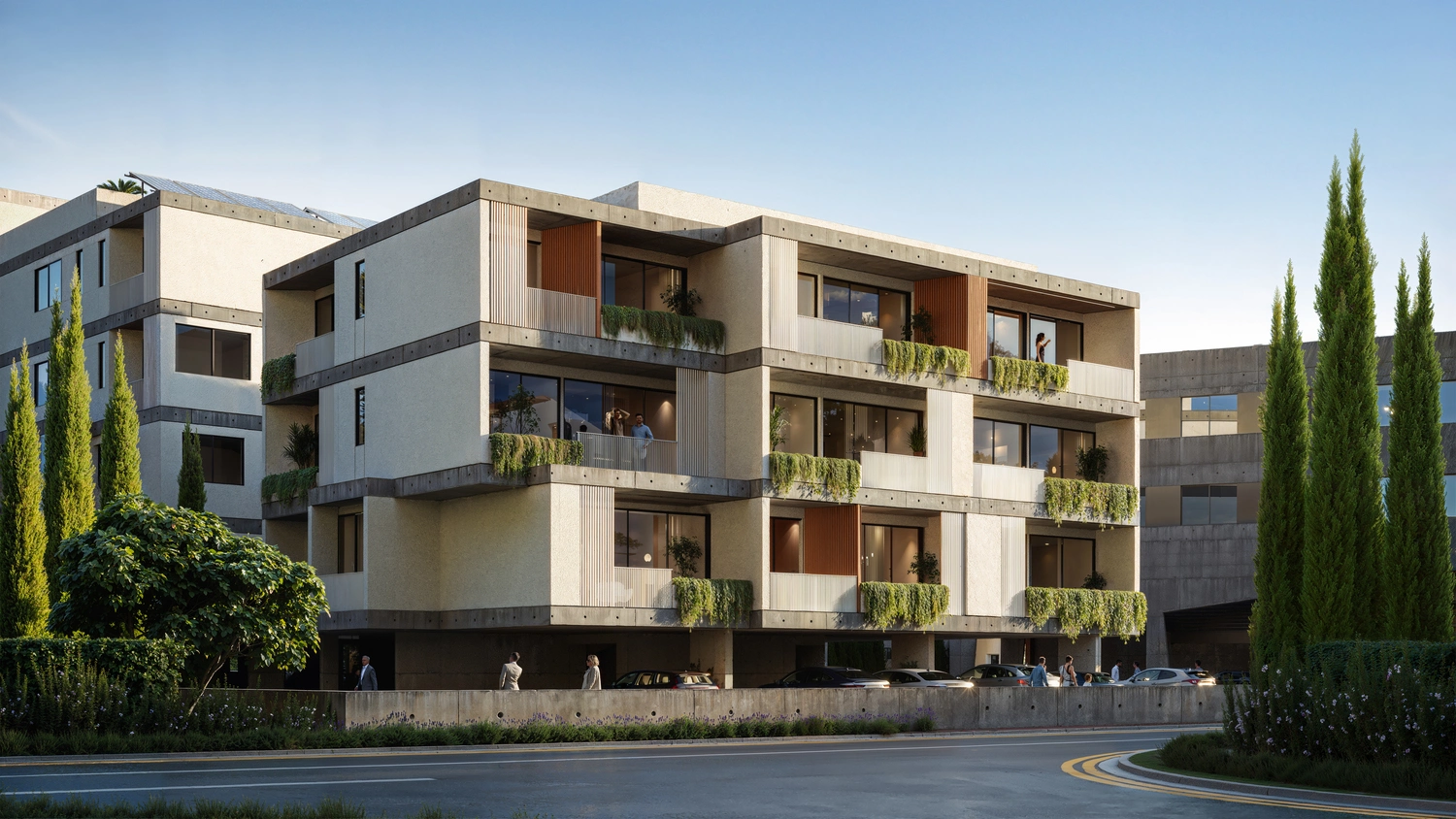
A developer can market a property before construction is complete by creating a realistic representation of the planned building.
Animation can show:
- The future building exterior
- Apartments and individual units
- Interior finishes
- Landscaping
- Pools and recreational areas
- Parking
- Clubhouses
- Retail areas
- Streets and entrances
- Views from balconies
- Day and night scenes
- Nearby amenities
This gives buyers something far more understandable than a technical drawing.
It also allows developers to begin marketing earlier, when photography of the completed property is impossible.
For new developments, luxury residences, multifamily projects, master-planned communities, and off-plan properties, this can turn an abstract concept into something buyers can actually visualize.
Can animation turn listing photos into a professional real estate video?
Yes, although there is an important difference between photo animation and true 3D animation.
A photo-based real estate video can use still listing images and add:
- Slow camera movement
- Zooms
- Crops
- Parallax depth
- Animated transitions
- Text overlays
- Music
- Voice-over
- Maps
- Floor-plan graphics
- Before-and-after sequences
This is fast and useful when photography already exists.
A 3D real estate animation goes further because the environment itself can be modeled. That allows the camera to move through spaces that were never photographed from that angle.
For agents who already have a strong photo library but need more video content, combining both approaches is often the most efficient solution.
Which is better for real estate: 2D animation, 3D walkthrough, 360° tour, or AI video?
There is no single winner. The right format depends on the problem the video needs to solve.
2D animation is best for maps, floor plans, processes, statistics, neighborhood explanations, and simple property concepts.
3D walkthrough animation is best when the viewer needs to understand space, design, finishes, flow, or a property that does not yet exist.
360° virtual tours are best when the viewer wants to explore an actual property interactively.
AI-assisted video can be useful for speeding up editing, scripting, voice-over, repurposing, and certain visual production tasks.
The strongest real estate marketing campaigns often combine them rather than forcing one format to do everything.
NAR’s 2025 data shows that 46% of REALTORS® use AI-generated content, while virtual tours are used by 38%.
The key is to use technology to make the property easier to understand not simply to make the video look futuristic.
How can animation show empty, staged, remodeled, and future versions of a home?
This is where animation becomes especially powerful.
An empty property may be physically clean but emotionally difficult to understand. A 3D animation can add realistic furniture and décor so viewers can see how the space might function.
For renovation properties, animation can show:
Before → proposed design → finished vision
A dated kitchen can become a modern kitchen.
A basement can become a home office.
An unfinished backyard can become an outdoor living area.
An empty apartment can become a furnished rental concept.
Virtual staging already uses digital technology to help viewers understand the potential of a space. Animation adds movement and storytelling to that idea.
The critical rule is disclosure: future concepts must be clearly presented as concepts. A marketing video should never make proposed construction, imagined furniture, or planned amenities look like completed facts.
How can real estate animation explain location, neighborhood, amenities, and site plans?
A property does not exist in isolation.
Many buying decisions depend on what surrounds the property.
Animation can begin with a wider aerial-style view and move toward the property while highlighting:
- Main roads
- Transit
- Parks
- Schools
- Shopping
- Restaurants
- Business districts
- Beaches or waterfronts
- Community entrances
- Shared amenities
- Parking
- Building locations
- Lot boundaries
- Views and access points
For a master-planned development, a single animation can show the entire community before moving into one individual building.
For a commercial property, animation can explain traffic flow, access, parking, signage, neighboring businesses, and visibility.
This can be much clearer than listing ten separate facts in a paragraph.
How long should a real estate animation be to keep viewers watching?
There is no universal perfect length.
The better rule is:
Use as much time as needed to answer the buyer’s important questions and no more.
For short-form social media, the opening seconds matter most. A strong version may quickly establish the property’s biggest differentiator before showing supporting details.
For a full property walkthrough, a longer runtime can make sense because the viewer expects a tour.
For a development presentation, the video may be longer because it must explain several buildings, amenities, layouts, and benefits.
A useful production strategy is to create one master real estate video and then cut it into shorter versions.
Video is particularly suited to this approach. Wyzowl’s 2026 research reports that 84% of consumers want to see more videos from brands, 89% say video quality affects their trust in a brand, and 63% prefer learning about a product or service through a short video.
Can one real estate animation be repurposed for MLS, YouTube, Instagram, TikTok, and ads?
Yes. In fact, a single production should ideally be designed for repurposing from the beginning.
One 3D property animation can become:
Master video: full property walkthrough
YouTube version: longer, searchable presentation
Instagram version: vertical highlight reel
TikTok version: fast feature-focused video
Facebook version: listing and neighborhood presentation
Paid ad version: short conversion-focused cut
Website version: branded property overview
Sales presentation: developer or broker presentation
Email version: short visual teaser
This approach reduces the need to create completely different videos for every platform.
NAR’s research also supports the importance of social distribution: social media was the most commonly reported lead-generating technology among REALTORS®, at 39%.
What should a real estate animation service need from an agent or developer?
The better the source information, the more accurate the final animation.
A service provider will normally need some combination of:
- Floor plans
- CAD or architectural files
- Property photographs
- Site plans
- Dimensions
- Material specifications
- Furniture preferences
- Landscaping references
- Branding assets
- Logo files
- Target audience
- Property highlights
- Location information
- Required video formats
- Voice-over requirements
- Desired deadline
The client should also identify what is existing, approved, proposed, or conceptual.
That one distinction can prevent major marketing problems later.
How much does a real estate animation video cost in 2026?
There is no honest single price for a professional real estate animation.
Pricing depends on the project’s complexity.
A simple photo-based listing video may require very little 3D work.
A detailed luxury-home walkthrough may require extensive modeling, textures, lighting, furniture, landscaping, animation, rendering, editing, and revisions.
A large real estate development can require:
- Multiple buildings
- Detailed site modeling
- Roads and landscaping
- Interior units
- Amenities
- Traffic and pedestrian motion
- Several camera paths
- Multiple versions
- High-resolution rendering
The most useful way to request a quote is not to ask only for a “real estate video price.”
Ask for a quote based on scope:
Number of scenes + amount of 3D modeling + animation duration + rendering quality + revisions + deliverable formats.
That produces a much more meaningful comparison between animation companies.
How can animation help sell luxury, commercial, multifamily, and off-plan properties?
Different property types need different stories.
Luxury real estate:
Focus on architecture, atmosphere, materials, views, lifestyle, privacy, pools, landscaping, and premium details.
Multifamily:
Show the building, unit layouts, amenities, circulation, parking, shared spaces, and community experience.
Commercial real estate:
Explain access, visibility, traffic, parking, tenant areas, floor layouts, signage, and surrounding context.
New construction:
Show the completed vision before construction photography becomes possible.
Off-plan property:
Translate architectural drawings into something buyers can emotionally understand.
Investment property:
Combine property visuals with simple explanatory graphics, maps, unit layouts, and relevant operating information.
The best animation is not simply attractive. It is purpose-built for the buying decision.

Can animation help buyers understand a floor plan faster?
Yes, especially when the floor plan is complicated.
A static floor plan requires the viewer to mentally convert lines into rooms and movement.
An animated version can solve that problem visually.
For example:
2D floor plan → camera enters the front door → living room → kitchen → hallway → primary bedroom → bathroom → patio
The viewer can see how rooms connect rather than trying to imagine the route.
A second option is a split-screen presentation:
Floor plan on one side + 3D camera view on the other.
That lets the viewer connect the drawing to the actual space.
This is particularly effective for luxury homes, large residences, multifamily buildings, and properties with unusual layouts.
What makes a real estate animation look trustworthy instead of fake?
Realism is more than high-resolution rendering.
Trust comes from accuracy and restraint.
A credible real estate animation should use:
- Correct proportions
- Accurate room layouts
- Realistic materials
- Natural lighting
- Believable furniture scale
- Correct architectural details
- Accurate site relationships
- Consistent geography
- Clear disclosure of proposed elements
Avoid making the property look dramatically larger, brighter, more luxurious, or more finished than it actually is.
The goal is not to create fantasy.
The goal is to create the clearest possible representation of the property.
This matters because video quality affects brand trust; Wyzowl’s 2026 consumer research found that 89% of respondents said video quality influences their trust in a brand.
How can animation services use AI without making a property video misleading?
AI can speed up parts of production, but it should not replace factual property information.
Good uses include:
- Script assistance
- Voice-over drafts
- Caption generation
- Editing assistance
- Background cleanup
- Content repurposing
- Storyboard development
- Variation testing
- Workflow automation
Higher-risk uses include inventing architectural features, changing dimensions, fabricating views, adding nonexistent amenities, or presenting proposed work as completed work.
A simple rule works well:
Use AI to improve the production process; use verified property information to define the property.
That balance keeps the video efficient without sacrificing trust.
Why are real estate animation services becoming more valuable right now?
Because buyers are not simply asking, “Is this house attractive?”
They are asking:
What does the space feel like?
How does the layout work?
What will this unfinished property become?
What is around it?
Can I understand the value without visiting immediately?
What makes this property different from the next one?
The current market makes those questions even more important. Redfin says buyers have gained more time and choice in many markets during the 2026 summer slowdown, while Zillow’s July 2026 forecast expects only modest housing-market growth for the year and continued regional differences in supply and demand.
When buyers can compare more listings, a generic slideshow becomes easier to ignore.
A strong real estate animation can make the information faster to understand and harder to forget.
The best real estate animation strategy for 2026
The most effective approach is not to create one beautiful video and stop.
Create a visual content system.
Start with one accurate master property model or master video.
Then produce:
1 long-form property walkthrough
3–5 short social videos
1 floor-plan animation
1 neighborhood or location video
1 amenities-focused video
1 before-and-after or future-vision video when relevant
1 short paid-ad version
This gives agents, brokers, builders, and developers more opportunities to reach buyers without rebuilding the entire project every time.
Real estate professionals are already moving in this direction. NAR’s 2025 technology survey found that 82% of REALTORS® said clients responded positively or very positively to technology in the buying and selling process, while social media remained the leading technology source of leads.
Final Answer: How can animation services create real estate videos?
They do it by turning property information into visual experiences.
A floor plan can become a walkthrough.
An empty room can become a staged home.
A construction drawing can become a future property.
A site plan can become a community flyover.
A listing photo can become a short-form video.
A large development can become an understandable story.
The strongest real estate animation services combine 3D modeling, architectural visualization, motion design, video editing, accurate property data, and platform-specific content.
And the biggest advantage is simple:
Animation does not only show a property. It helps people understand the property before they ever step inside.
Research sources
National Association of REALTORS®, 2025 REALTORS® Technology Survey and 2025 Profile of Home Buyers and Sellers.
Zillow Research, What Should You Expect for Housing in the Rest of 2026? and 2026 housing-market research.
Redfin, Slow Summer Housing Market Gives Buyers More Time, Choices and Negotiating Power, August 2026.
Wyzowl, Video Marketing Statistics 2026.
Realtor.com PRO, How Video Marketing Can Help You Amp Up Your Lead Generation.



