

In a fast-moving digital ecosystem, every business is leaning on smarter, faster, and more resilient online platforms. Whether you’re launching a startup, scaling an enterprise system, or reinventing your digital presence, understanding frontend and backend technologies is the foundation of building high-performing applications. These two development pillars define how your website looks, how it works, and how users experience it.
Modern web experiences are powered by a smart blend of user-centric interfaces on the front and efficient data-driven systems on the back. When businesses combine the right tech stacks, they unlock speed, scalability, and long-term digital competitiveness.
What Are Frontend Technologies?
Frontend technologies shape everything a user sees and interacts with. The buttons, layouts, animations, and product displays—these elements are built using a combination of coding languages, frameworks, and UI/UX approaches.
The modern frontend landscape focuses on performance, responsiveness, and accessibility.
Key frontend technologies include:
• HTML5 – the structural foundation
• CSS3 – for layout, animations, and styling
• JavaScript – for interactive experiences
• React, Vue.js, Angular – top-tier frontend frameworks
• Tailwind CSS, Bootstrap – UI component libraries
• Next.js, Nuxt.js – for SSR and blazing-fast performance
Frontend technologies focus on elevating user experience through dynamic interfaces, clean navigation, and optimized loading times. These tools ensure visitors not only land on your platform but stay, engage, and convert.
What Are Backend Technologies?
Backend technologies operate behind the scenes — and they’re the reason your website or app can process transactions, store data, handle authentication, and run complex logic. Backend systems keep everything secure, connected, and scalable.
Key backend technologies include:
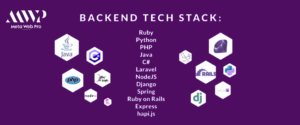
• Node.js, Python, PHP, Ruby on Rails – widely used backend languages
• Django, Laravel, Express.js – powerful backend frameworks
• MySQL, MongoDB, PostgreSQL, Firebase – database engines
• API integrations – linking third-party services
• Cloud providers – AWS, Google Cloud, Azure
“we specialize in delivering custom web development services for small businesses, building scalable, performance-driven websites tailored to your unique brand and growth goals.”
While the frontend pulls users in, the backend ensures their journey is fast, smooth, and reliable.
Why Frontend/Backend Technologies Matter for Businesses
When a business invests in the right technology stack, it creates a streamlined product ecosystem that boosts performance and customer trust.
Here’s how a strong tech foundation accelerates growth:
1. Faster load times = higher conversions
A slow website kills 42% of potential customers. Modern frontend frameworks like React or Vue reduce load times dramatically.
2. Better security for customer data
Backend systems built using secure frameworks (Laravel, Django) reduce vulnerabilities and block cyberattacks.
3. Seamless scalability
From 100 visitors to 100,000, modern backend systems scale without compromising performance.
4. User-friendly and mobile-first experiences
Frontend technologies ensure your website looks sharp and functions beautifully across devices.
5. Improved SEO rankings
Search engines reward sites that load fast and provide smooth navigation — both powered by smart tech choices.
Businesses that align their frontend and backend strategies stand out in a crowded digital market.
How Frontend and Backend Work Together
Think of your application as a restaurant:
Frontend = everything customers see.
Backend = everything happening in the kitchen.
When both sides operate smoothly, your digital platform becomes an experience users trust.
For example:
• A customer clicks “Buy Now” (frontend).
• The request triggers order processing (backend).
• Data is fetched and displayed instantly (frontend).
This constant communication between client and server creates the seamless digital journeys users expect today.
Choosing the Right Tech Stack for Your Project
The right technology stack depends on:
• Your business goals
• Project size
• Budget
• Scalability needs
• Application complexity
Startups may benefit from Node.js + React for rapid development.
Enterprises often choose Python/Django or Java for large-scale systems.
Ecommerce platforms prefer PHP/Laravel or headless architecture.
A strategic tech stack ensures long-term digital health and reduces development costs.
Conclusion
Frontend and backend technologies are the backbone of every successful digital platform. When businesses align the right frameworks, languages, UI/UX strategies, hosting systems, and databases, they unlock a powerful ecosystem built for performance, security, and growth. With technology evolving rapidly, choosing a future-proof stack ensures you stay competitive, agile, and ready for what comes next.
FAQs
What is the difference between frontend and backend technologies?
Frontend manages what users see; backend processes data and runs logic behind the scenes.
Which backend language is most popular today?
Node.js and Python dominate modern development due to speed, scalability, and large developer communities.
Is full-stack development better for small businesses?
Yes — full-stack developers can manage both sides, reducing development time and costs.
What are the best frontend frameworks?
React, Vue.js, and Angular remain industry leaders in performance and developer support.
How do I pick the right tech stack for my business?
Choose based on budget, scalability, and long-term goals. Consulting with technical experts helps avoid costly mistakes.



